

A service charge is not simply a bill for repairs. It may cover maintenance, communal-area cleaning, grounds and lift upkeep, insurance, compliance inspections and managing-agent fees. Facilities management for residential blocks brings operational responsibilities together, helping residents understand how building upkeep, inspections and shared costs connect.
It is reasonable to want a clear explanation of what charges cover and who is responsible for each task. This article explains how service-charge budgets and financial records work, which inspections help monitor a block, and how resident communication supports day-to-day management. It also explains how facilities management fits alongside the responsibilities of property managers and managing agents, so you can see how planned maintenance and clear oversight help keep shared areas in order.
Key Takeaways
- Keep inspection findings and maintenance records together to support consistent oversight and follow-up.
- Clear resident updates and a record of concerns can help manage shared-area issues and resolve disputes.
- Use budgets and long-term maintenance plans to organise expected work and understand how service-charge spending is allocated.
- Clarify who manages each responsibility, including inspections, communal upkeep and leaseholder processes such as Right to Manage.
Compliance assessments and inspections
For a residential block, inspections turn safety and maintenance concerns into recorded actions. The Building Safety Act is relevant to building-safety requirements, while clear records help managers track findings and follow up.
Compliance assessments
A compliance assessment reviews a block’s condition, inspection records and maintenance reports against relevant requirements. It matters because a documented review can show what needs attention, who is responsible and whether action has followed. For example, a manager can compare a contractor’s latest report with earlier findings, record unresolved defects and assign a point of contact. Inspection software can keep a historical timeline of reports and maintenance, helping managers follow the status of actions and maintain an organised record.
Building safety compliance
Building-safety compliance concerns the measures and records used to identify and manage safety risks in a residential building. The Building Safety Act forms part of the context for residential block management. Inspections can identify issues affecting shared spaces or building systems, while reports record the findings and next steps. If a contractor identifies a defect, the manager can log it, coordinate follow-up work and keep the report with earlier records. This gives a clearer view of the issue’s history and current status.
Health and safety compliance
Health and safety compliance focuses on risks to people using the building and its shared areas. Block managers are responsible for ensuring the property meets relevant laws and standards, including fire-safety and health and safety requirements. Practical checks can record concerns such as an obstruction in a shared route or a maintenance issue that needs attention. The manager can document the observation, arrange appropriate follow-up and retain the inspection record. Clear records link the reported concern with the action taken.
Legal compliance
Legal compliance means managing the block in line with the laws and responsibilities that apply to it. Leaseholders considering a change in management should understand the formal route: according to The National Archives, the Right to Manage process for leaseholders in the UK is set out in the Commonhold and Leasehold Reform Act 2002. For ongoing management, a property manager or managing agent helps ensure the block management company follows relevant regulations and standards, including those set by ARMA and RICS. Recorded inspections, contractor reports and follow-up actions support clear oversight.
Resident communication and dispute resolution
Clear communication helps residents understand how shared spaces are managed and how issues are progressing. A consistent process also gives owners and tenants a practical way to raise concerns.
Resident expectations and communication
Resident communication explains what is happening on the estate, who is involved and how updates will be shared. Residents need a clear point of contact for maintenance concerns, shared facilities and management questions. For example, an update about a planned repair can identify the affected communal area, describe the work and explain how residents can report access problems. Consistent messages reduce confusion and set practical expectations.
Resident communications and support
Resident support means receiving concerns, directing them to the relevant person and recording the response. This helps prevent reports from being lost between residents, managing agents and contractors. A simple log can capture the issue, its location, the assigned action and any update. For example, a report of a faulty shared light can be passed to the maintenance team and closed once the repair is recorded.
Communal areas and shared facilities need ongoing care. Maintenance may include landscaping, cleaning, plumbing, electrical work and structural repairs. A reported problem should be directed to the appropriate contractor, with access arrangements and follow-up communicated to affected residents. This makes responsibilities clear and helps managers distinguish urgent building issues from routine estate upkeep.
Disputes may arise between property owners or between owners and tenants. A block manager may help by hearing concerns, clarifying the issue and supporting those involved in reaching a workable resolution. Lease compliance, rent collection and related matters can also form part of tenant management. When a disagreement concerns shared finances, clear records of relevant charges and communications help keep the discussion focused.
For a recurring repair affecting shared spaces, reactive maintenance support can form part of the operational response. Clear reporting, assigned responsibility and a recorded outcome help connect resident feedback with practical action.
Service charge budgets and financial records
Service charges fund shared building costs, while a budget sets out planned spending. Clear records help leaseholders and property managers follow how funds support the block.
Service charge budgeting
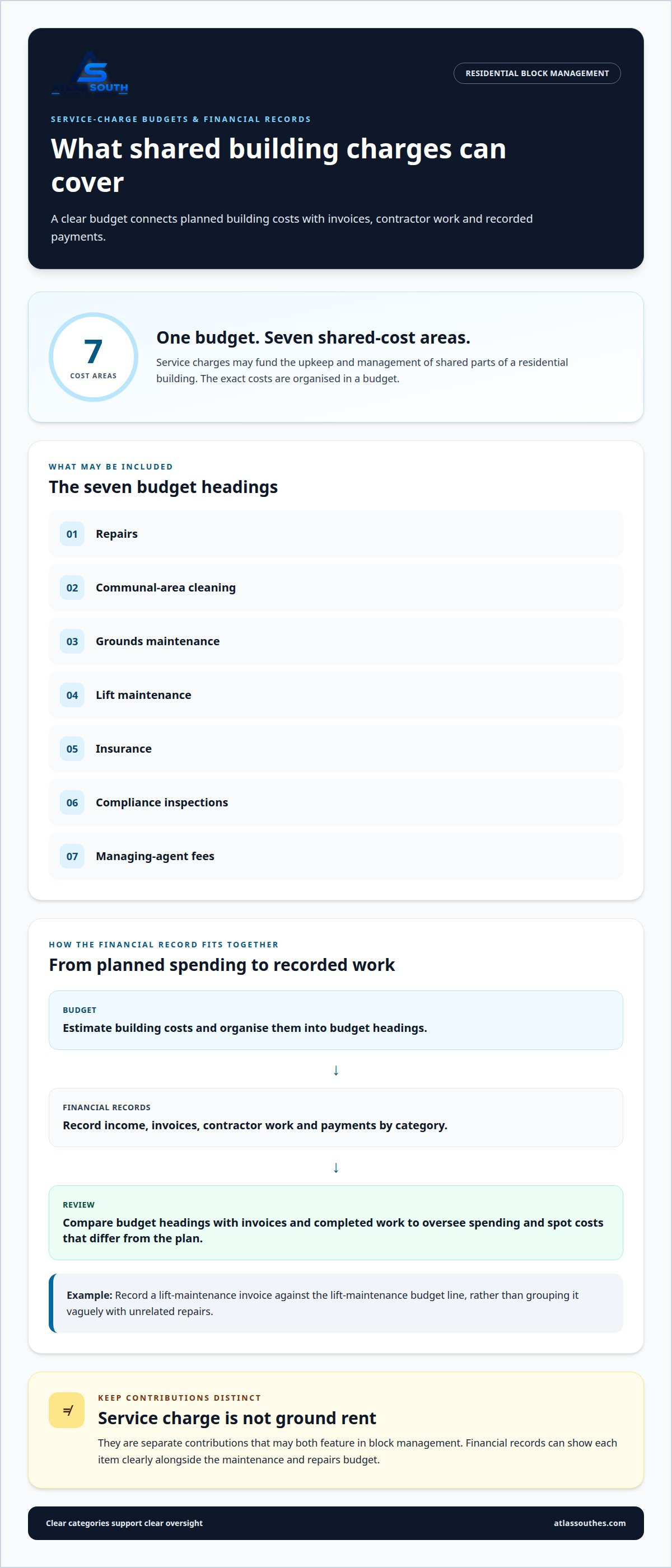
Service-charge budgeting estimates the costs of managing and maintaining a residential building, then organises them into a financial plan. Leaseholders contribute towards shared costs, so they need a clear connection between planned work and spending. Charges may cover repairs, communal cleaning, grounds and lift maintenance, insurance, compliance inspections and managing-agent fees. Managers can compare budget headings with invoices and completed work to oversee expenditure and identify where costs differ from the plan.
Service charges and ground rent are separate contributions that may both feature in block management. A block manager may collect service charges and ground rent, then manage the maintenance and repairs budget. Financial records can organise income, invoices, contractor work and payments by category. For example, a lift-maintenance invoice should be recorded against the relevant budget line, not grouped vaguely with unrelated repairs. This makes the building’s finances easier to review and explain.
Block management planning and budgeting
Block-management planning connects future building needs with budgets for ongoing maintenance. A long-term plan helps managers organise work before issues become unexpected expenses. It might identify recurring lift maintenance, communal cleaning and grounds work, alongside repairs that need monitoring. Managers can use these priorities to prepare budget forecasts, schedule work and compare planned costs with actual invoices. Property management then connects the financial plan to the building’s operational needs.
Good administration connects financial information to decisions. For each planned job, records can show the reason for the work, its budget category, the contractor’s invoice and whether the work was completed. Managers can review these records when updating future plans. For example, repeated repairs to the same shared feature may affect its future maintenance allowance. This helps leaseholders understand how service charges relate to the block’s upkeep, rather than viewing each cost in isolation.
Residential block management responsibilities
Residential block management covers day-to-day oversight of multi-unit buildings, including flats and apartments. It spans shared spaces, building services and the coordination needed to keep the estate operating.
A residents’ management company should choose a block facilities management provider by assessing the tasks required, reporting arrangements and accountability. Compare the proposed scope with the block’s needs, such as communal cleaning, security or planned maintenance, and define who coordinates each activity.
Facilities management focuses on operational services and the physical upkeep of a building. Block property management has a broader administrative role, which may include lease compliance, service-charge administration and communication with owners and tenants. The functions are connected, but clear boundaries help prevent maintenance requests or management decisions from being missed.
A facilities management contract for a residential block should set out the agreed service scope, responsibilities, reporting process and route for raising issues. It should explain how contractors are coordinated, how completed work is recorded and how changes to planned tasks are handled. These details give owners and managers a shared reference point.
Management companies may oversee day-to-day cleaning, gardening and security, as well as maintenance of communal areas and shared facilities. For example, a report about a damaged shared entrance should have an assigned responsible party, a recorded action and an update route for affected residents. This helps owners understand who is managing the issue.
Good oversight joins operational work to the block’s wider management. Set a clear point of contact, record decisions and review whether responsibilities remain aligned with the building’s needs. Discuss facilities management requirements for your residential block.
Atlas South Technical Service: Facilities Management
Atlas South Technical Service provides facilities management for organisations that need coordinated oversight of building services. Its support brings operational tasks together under one contract, helping property teams coordinate ongoing requirements and maintain clear accountability.
Commercial Cleaning, Security Services and Venue and Events Cleaning can support the day-to-day operation of managed sites. These services suit sites where cleaning, security and facilities responsibilities need structured coordination. For residential block management, define the required scope and responsibilities clearly so operational services fit the building’s management arrangements.
When your organisation is reviewing facilities support or coordinating services across multiple sites, contact Atlas South Technical Service to discuss your requirements. You can also visit atlassouthes.com.
Set a Clear Direction for Your Building
Use your next management review to turn operational priorities into a clear brief. Identify which tasks need ongoing coordination, who approves work and how progress will be reported. This gives owners and managers a practical basis for aligning facilities management for residential blocks with the building’s arrangements and residents’ needs.
Keep operational requirements distinct from property-management decisions, then define where responsibilities connect. Atlas South Technical Service provides Facilities Management, Commercial Cleaning and Security Services for organisations that need support with building operations. A defined scope helps establish how these services fit your requirements.
To discuss operational support for your site, contact Atlas South Technical Service. A clear brief is a practical first step towards a more organised approach.
Frequently Asked Questions
What are service charges?
Service charges contribute towards the costs of maintaining and managing a shared residential building. The lease usually sets out how costs are allocated and what residents may be charged for. For example, a charge might include work on a shared entrance or cleaning communal corridors. Residents can compare charge descriptions with relevant invoices and completed work to understand how spending relates to the building.
What does facilities management for residential blocks include?
Facilities management coordinates operational services and the upkeep of a residential building’s shared areas. Depending on the agreed scope, it can include cleaning, security, maintenance and arranging work on building systems. For example, a facilities manager may coordinate access for a contractor repairing a shared door, then record completion. In London, managed blocks also need clear coordination between site operations and those handling property-management decisions.
What are the responsibilities of a residential block facilities manager in the UK?
A residential block facilities manager coordinates practical work to keep shared spaces and services operating. This may involve receiving a fault report, assigning it to the right contractor, arranging access and recording the outcome. The facilities manager’s responsibilities differ from those of a managing agent, who may handle leases, service-charge administration or resident queries. A written division of duties helps owners know where to direct each issue.
What legal and safety obligations apply to facilities management in UK residential blocks?
Managers must ensure the property meets relevant laws and standards, including fire-safety and health and safety requirements. This involves identifying building-related concerns, arranging appropriate follow-up and keeping records to support oversight. The Building Safety Act is relevant to residential building-safety requirements. Responsibilities depend on each party’s role and the building’s circumstances, so management arrangements should clearly identify who coordinates each operational action.
How are cleaning, repairs, maintenance and communal areas managed in residential blocks?
Management teams organise these tasks by recording each issue, assigning responsibility and tracking completion. For instance, when a resident reports a leak in a shared corridor, the manager can note its location and impact, arrange the relevant plumbing work and update affected residents. Cleaning and grounds tasks can be scheduled separately from reactive repairs, making it easier to track routine upkeep and individual faults across the estate.
What insurance, fire safety and building compliance checks are required for residential blocks?
The checks depend on the building, its management arrangements, and relevant insurance and safety requirements. Managers should keep accessible records of insurance documents, inspection findings, reported defects and actions taken. For example, a fire-safety inspection finding should be logged with its assigned follow-up, while insurance records should be reviewed alongside the building’s coverage arrangements. This makes outstanding actions and responsibilities easier to identify.

